Area Summary
Affected materials and cleanup boundaries reviewed.
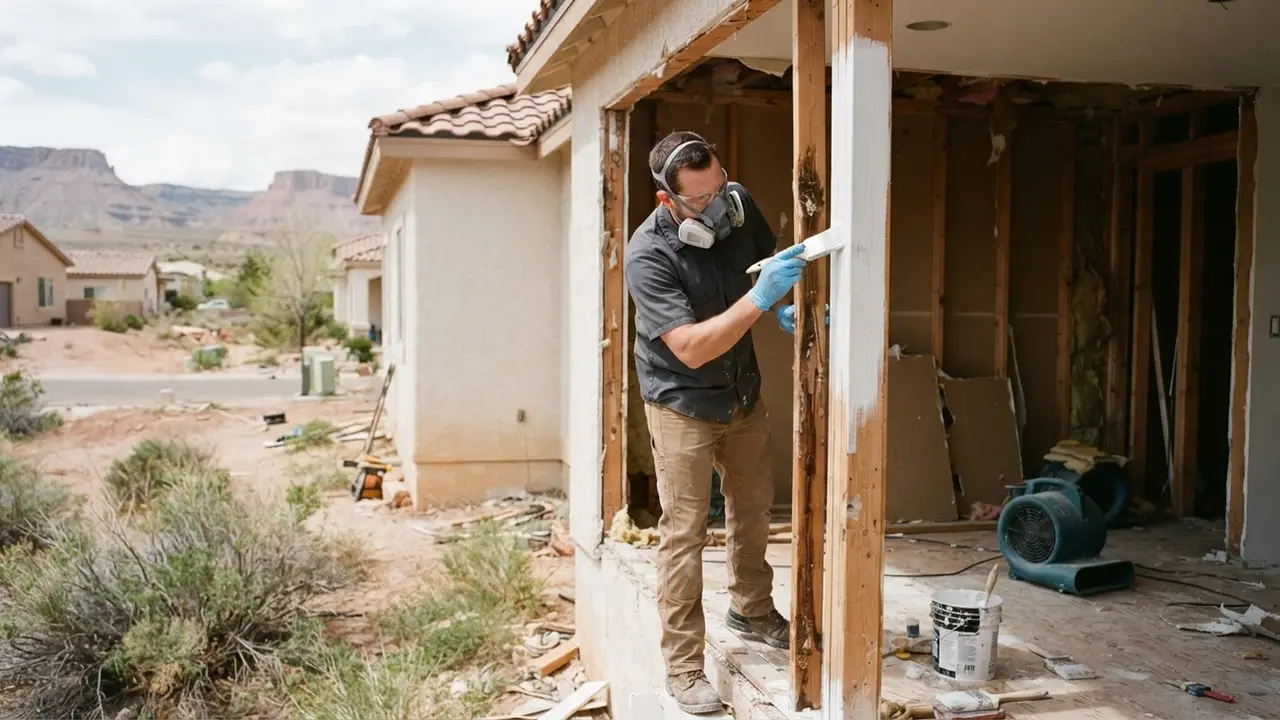
Mold remediation Mesquite NV helps homeowners and property managers address visible growth, musty odors, and concealed moisture before damage spreads. We inspect the affected area, identify the water source, and explain the work needed to return materials to a dry, usable condition. Our mold removal Mesquite NV service is built for leaks, flooding, and damp materials that need controlled cleanup rather than surface treatment alone.
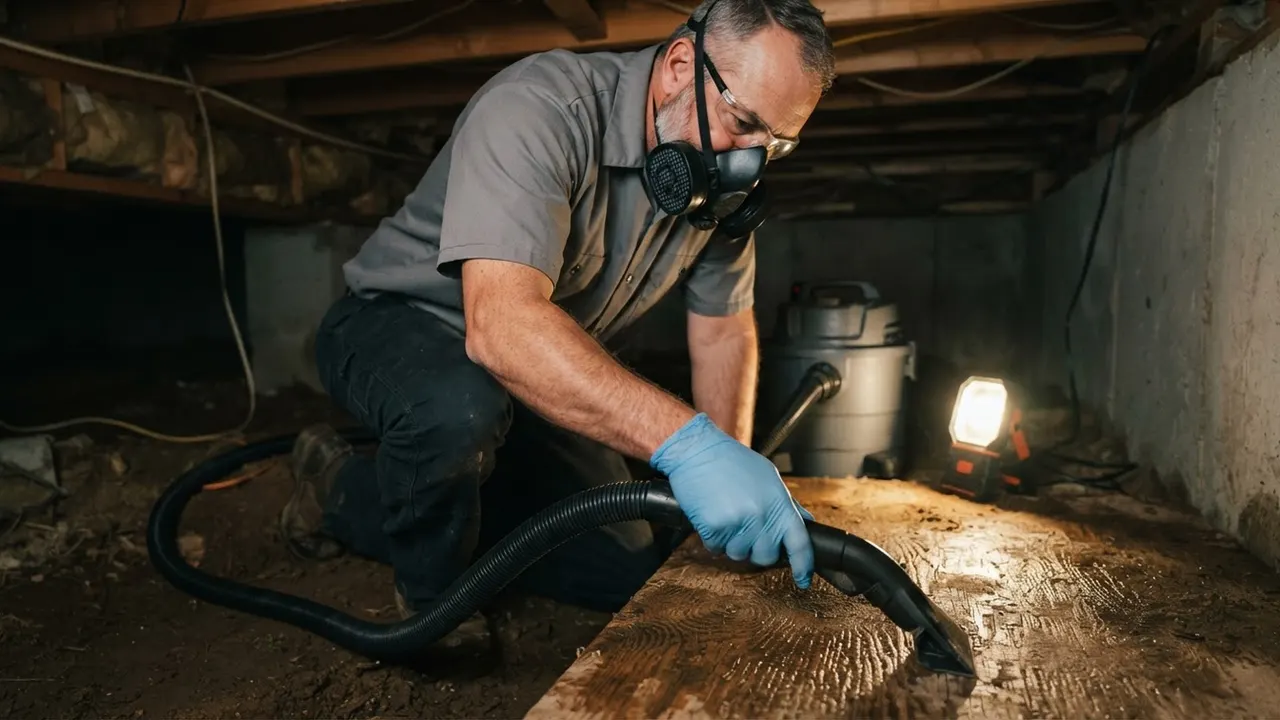
Our mold remediation work covers inspection of visible and likely affected areas, containment, removal of damaged porous materials, cleaning of suitable surfaces, and drying checks. We also identify the water source and coordinate related repairs when needed. Reconstruction, independent laboratory testing, and replacement finishes are separate work when the project calls for them; we explain how those steps fit the cleanup sequence.
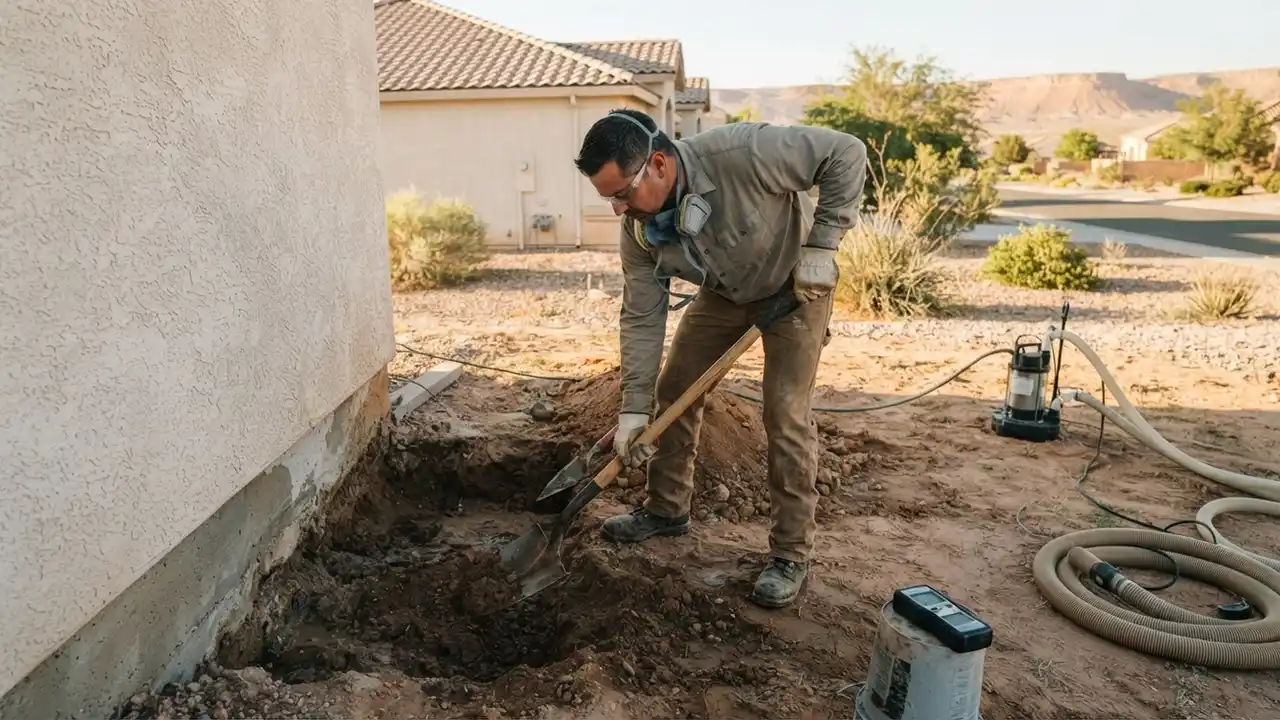
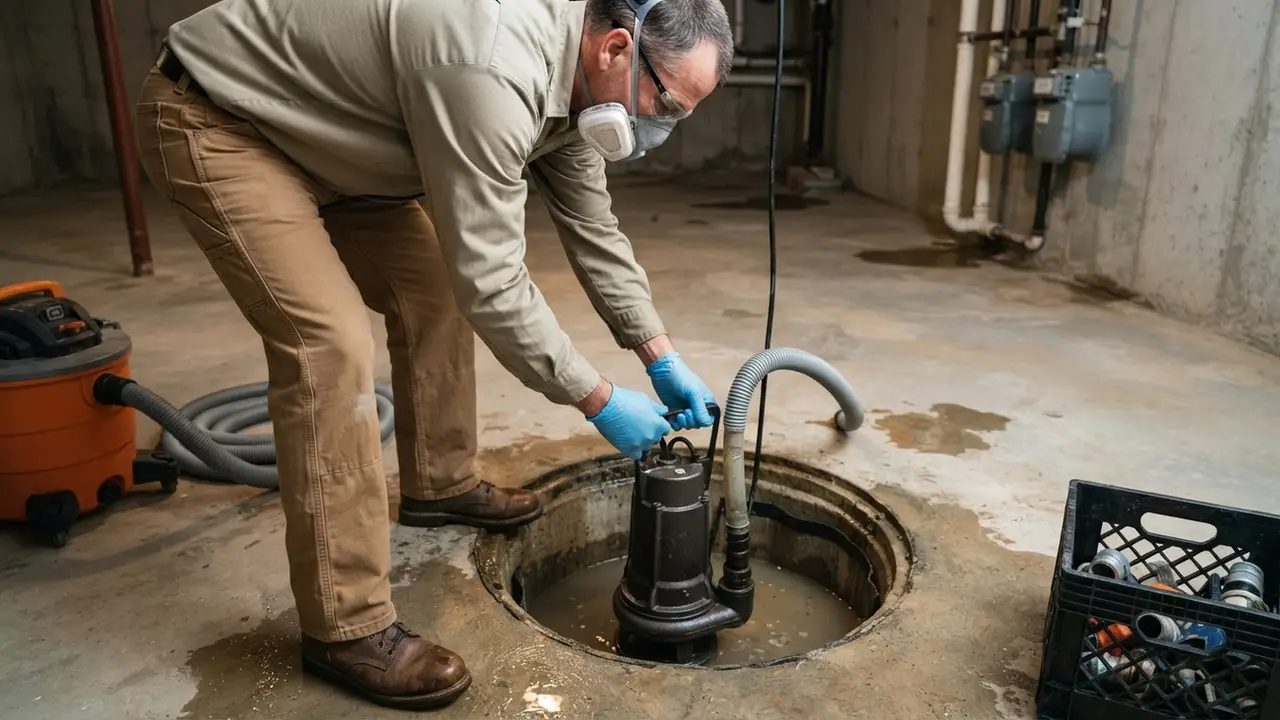
We help homeowners and tenants identify where water traveled and which materials need removal. You get a controlled cleanup plan that accounts for occupied rooms, belongings, and the next repair step.
We plan containment around staff, customers, and the rooms your business needs to keep using. Property managers receive clear updates on affected materials, drying progress, and the handoff to repairs.
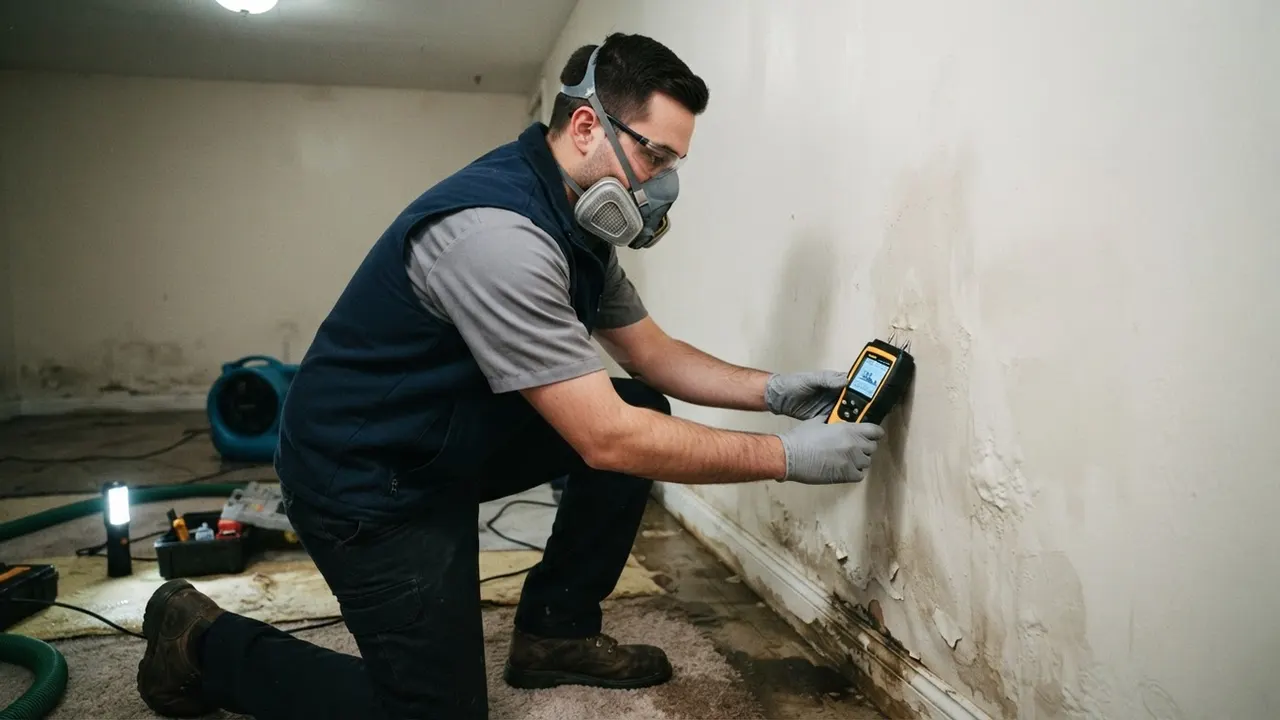
Mold remediation Mesquite NV is a controlled building cleanup process that removes mold-affected materials, limits airborne dust, and corrects the moisture conditions that allow growth. We start by locating the wet area, checking adjoining materials, and defining containment before removal begins. A moisture meter and thermal imaging camera help us map damp drywall, baseboards, and flooring; readings guide drying rather than guesswork. We then remove unsalvageable porous material, clean remaining surfaces with suitable methods, and dry the structure. The goal is a documented, cleaner work area and a practical path to repairs.
Mesquite properties can develop mold after a roof leak, appliance leak, plumbing failure, or storm flooding, even when the original water is no longer visible. Moisture trapped behind drywall or under carpet padding can persist after a room looks dry, especially around slab edges and cabinets. Our mold cleanup services Mesquite process follows the source from the damaged room into adjacent cavities, then verifies drying conditions. If you are searching for mold remediation after water damage Mesquite NV, prompt inspection helps identify wet insulation and other materials before the affected area grows.
Remove affected material, control moisture, and verify drying before repairs.
Mold remediation Mesquite NV follows a deliberate sequence: inspect, contain, remove, clean, and verify drying. We explain each stage before work affects your home or business, keep the work zone controlled, and share what we find as the condition of concealed materials becomes visible.
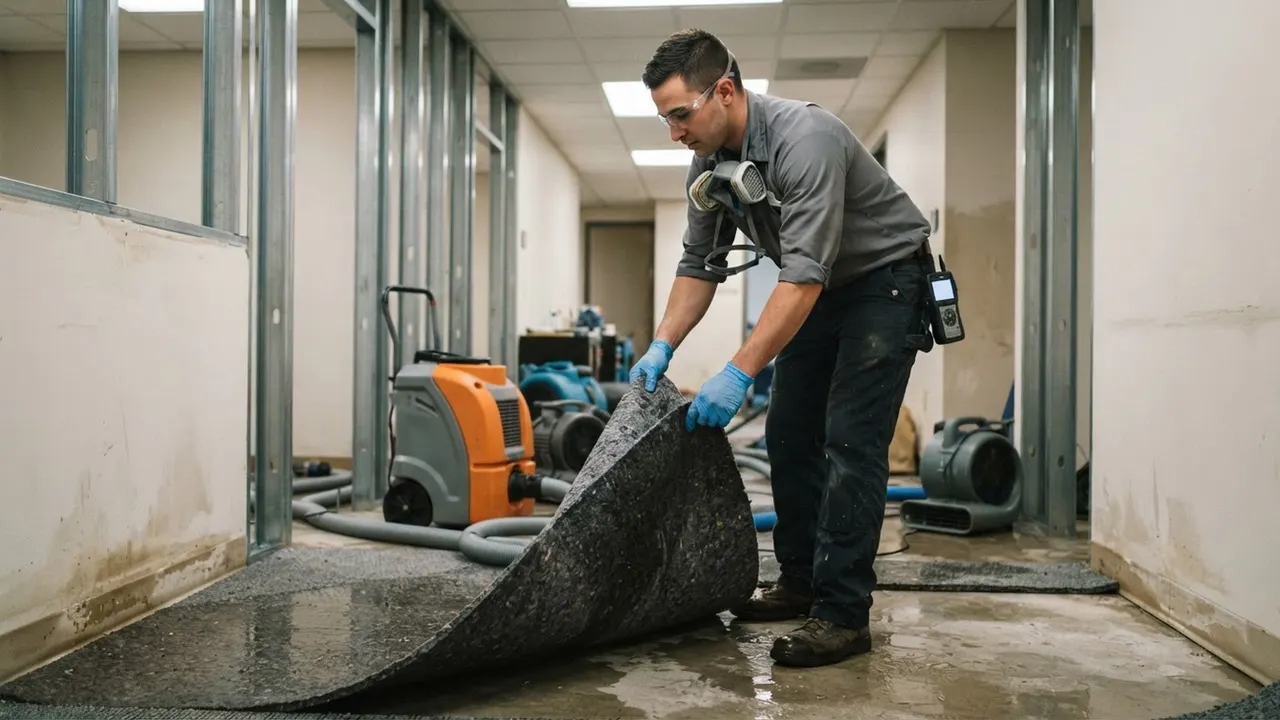
We begin by asking when the leak or flooding occurred and which rooms changed afterward. Then we inspect visible growth, nearby materials, and likely moisture paths with a moisture meter and thermal imaging camera. This initial visit often takes 30 to 90 minutes for a limited area. You see the affected boundaries and understand what needs closer inspection before removal.
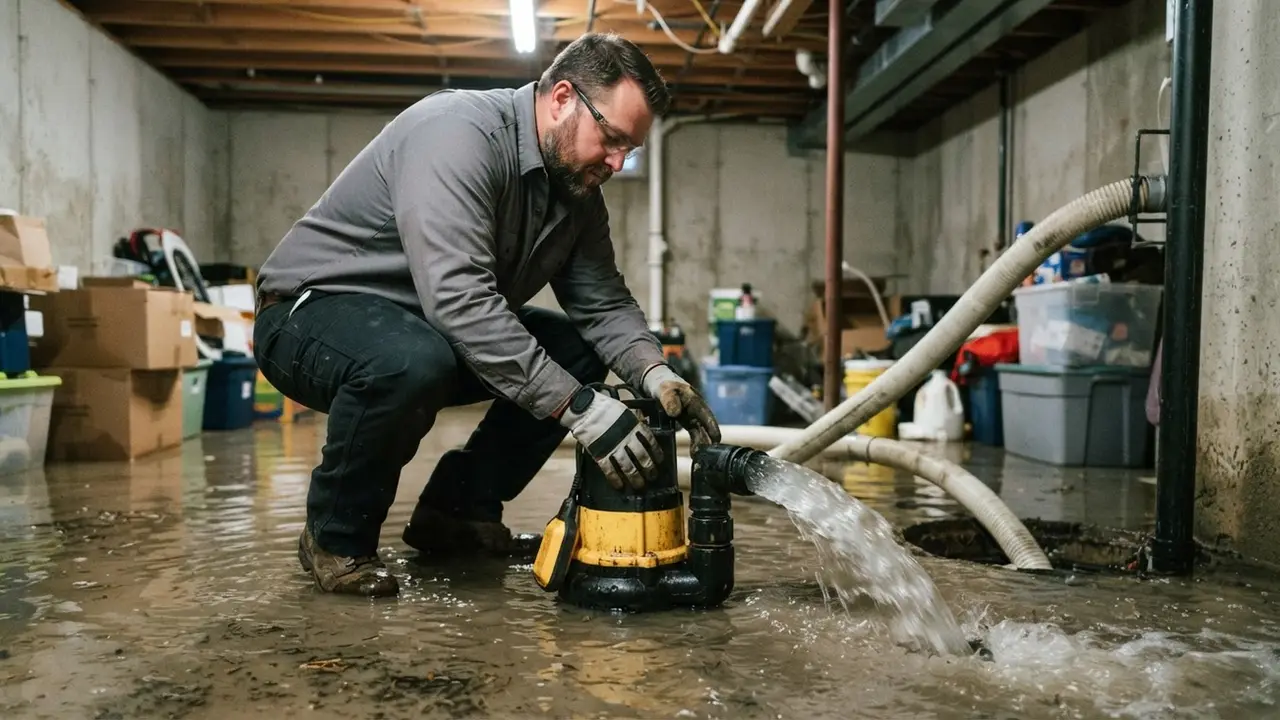
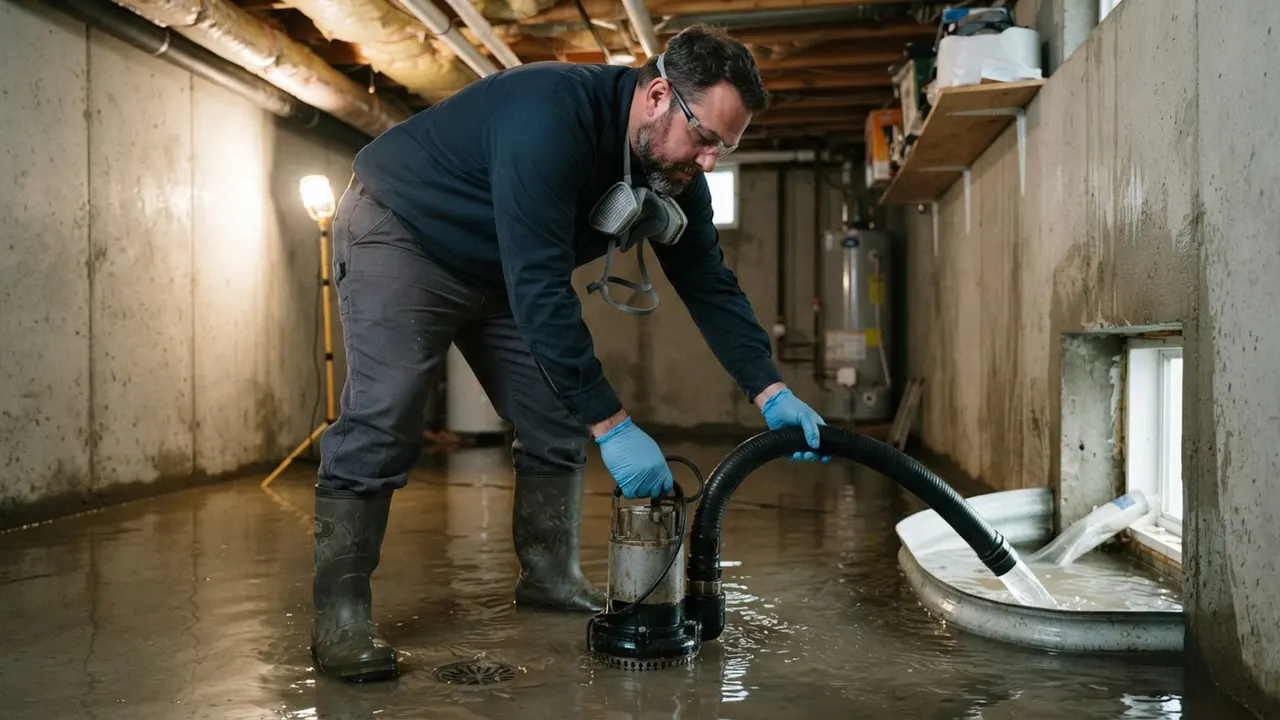
Before cleanup, we identify whether water is still entering from a roof leak, pipe, appliance, or another source. We arrange the appropriate repair or extraction step so the work does not proceed over an active leak. A water extraction unit can remove standing water, while the source repair prevents new moisture from undoing the cleanup.
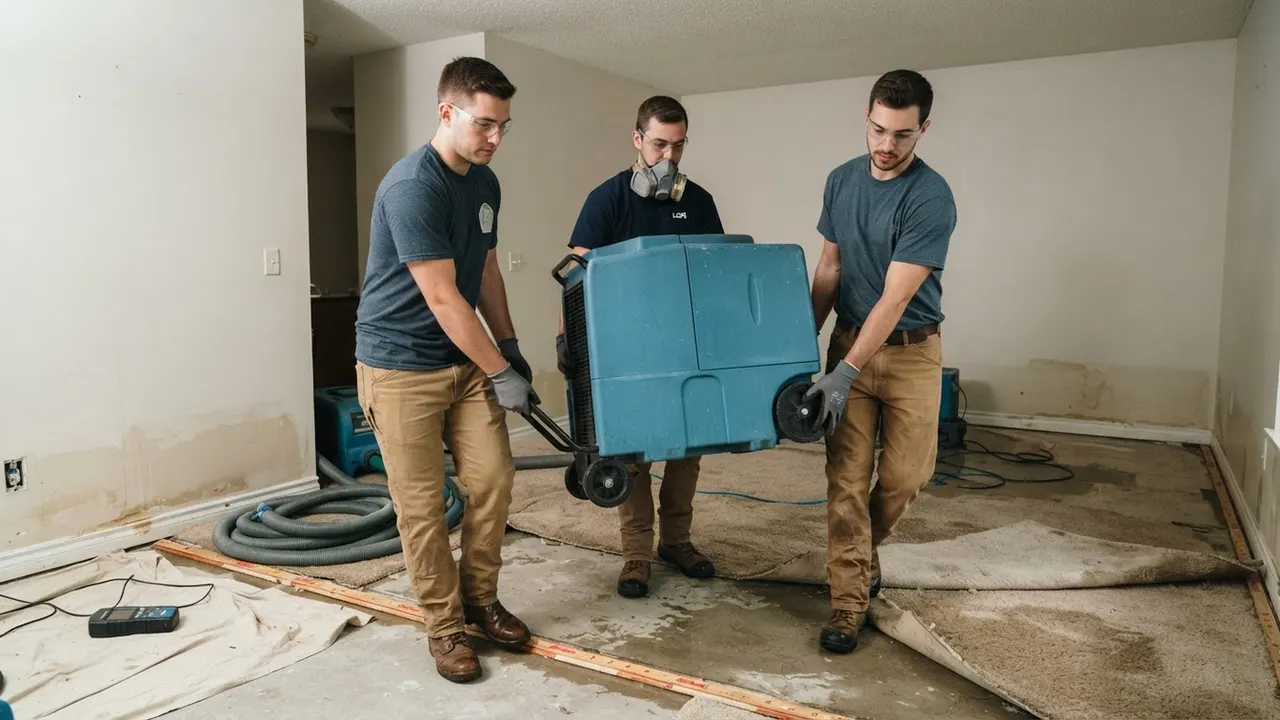
We isolate the work area with barriers and position filtration equipment before disturbing affected surfaces. The setup protects nearby rooms and gives our crew a controlled route for bagging and moving debris. You can expect some restricted access while containment is active; we explain which doors, halls, or storage areas need to stay clear.
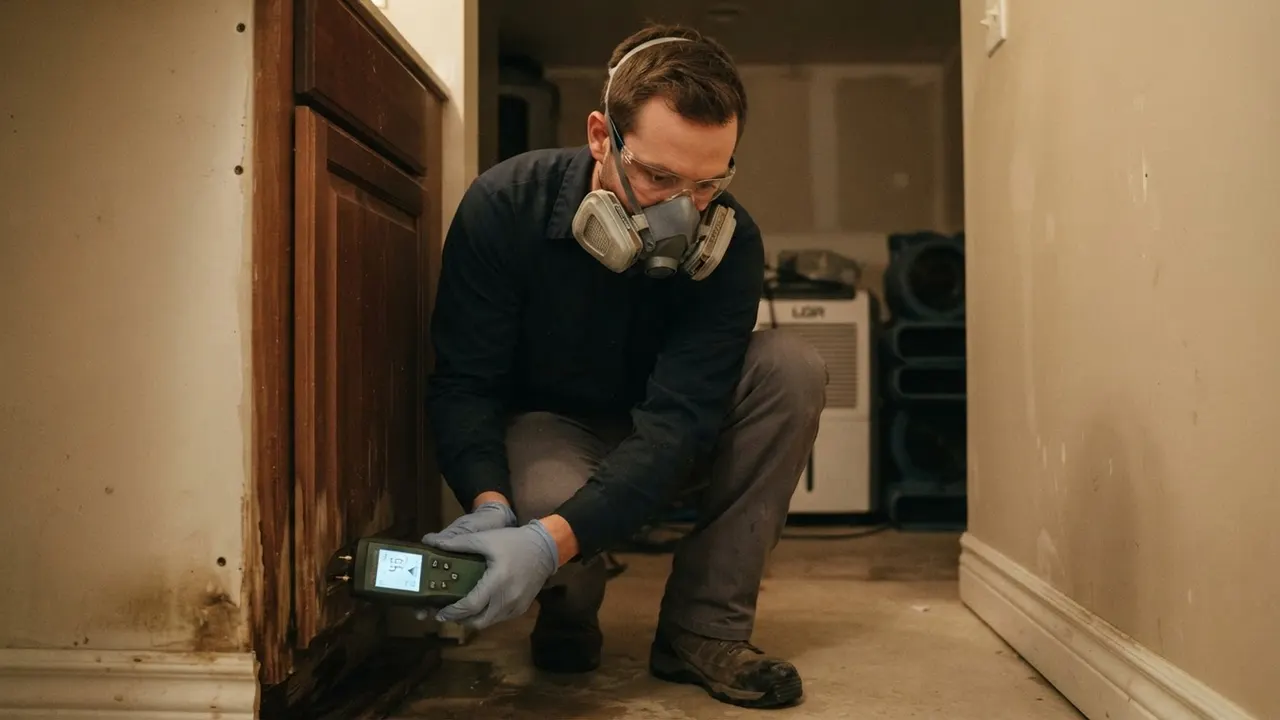
Our team removes mold-affected porous materials that cannot be reliably cleaned, such as damaged drywall or insulation, then cleans suitable structural surfaces. We work in manageable sections and keep debris contained. A small isolated area may take several hours, while multiple rooms or concealed damage can require several workdays.
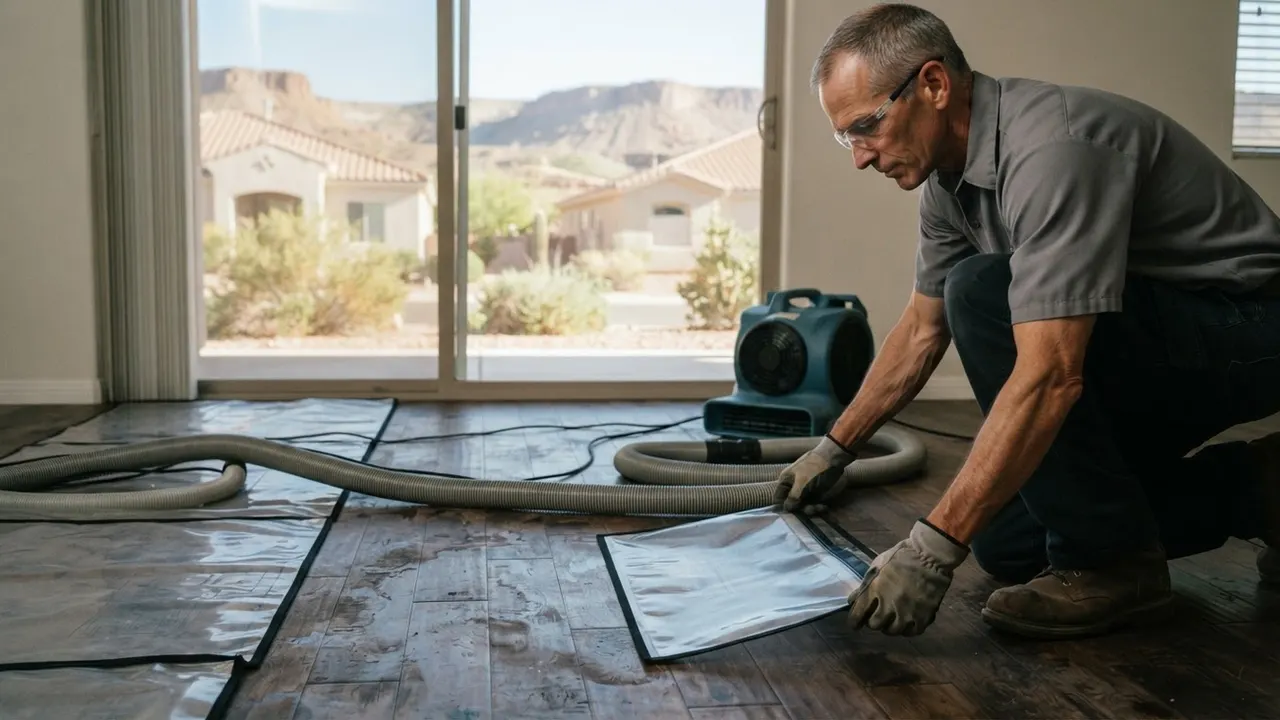
After cleaning, we run drying equipment and check moisture conditions at affected materials until they meet the project target. A hygrometer helps track room humidity, while repeat readings show whether wall cavities and flooring are drying. We review the findings with you and identify any remaining repair or reconstruction work before the area returns to normal use.
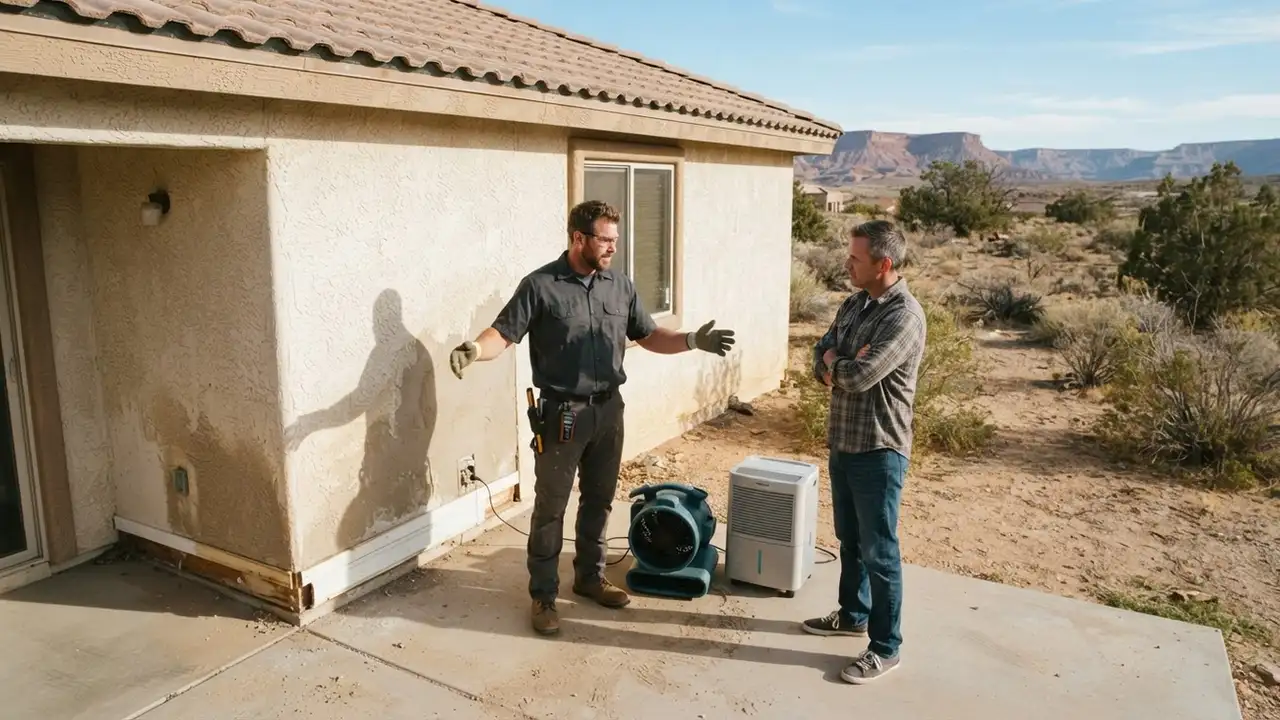
We take repeat readings in drywall, trim, and accessible framing to find wet materials and track drying progress. The readings help distinguish a dry-looking surface from a damp assembly.
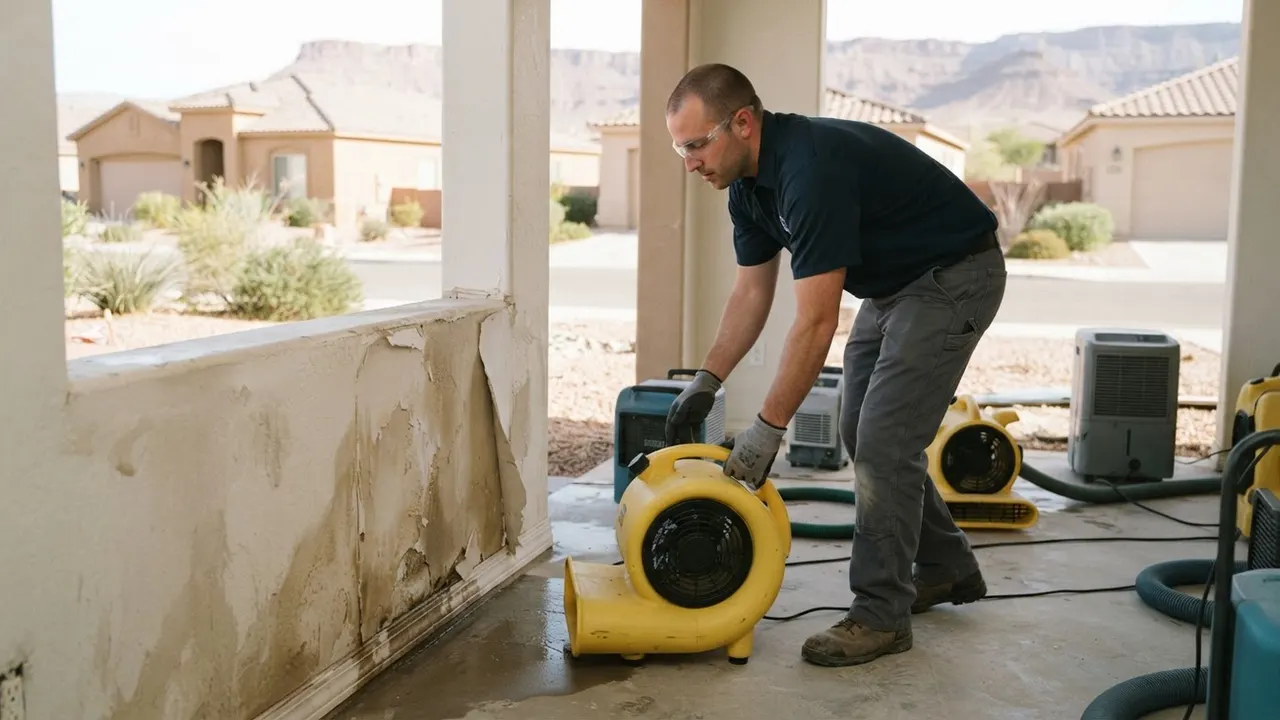
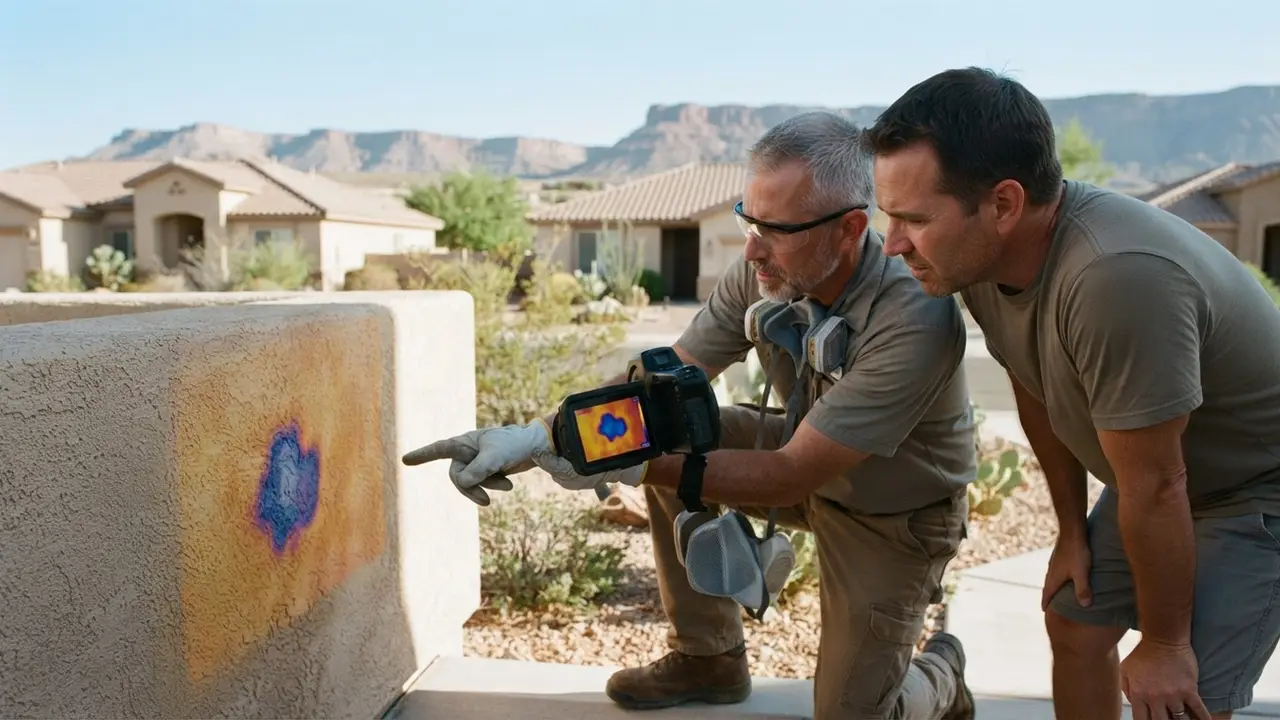
We use thermal patterns to identify areas that warrant closer moisture checks around leaks and stained surfaces. It guides inspection; it does not replace direct measurement.
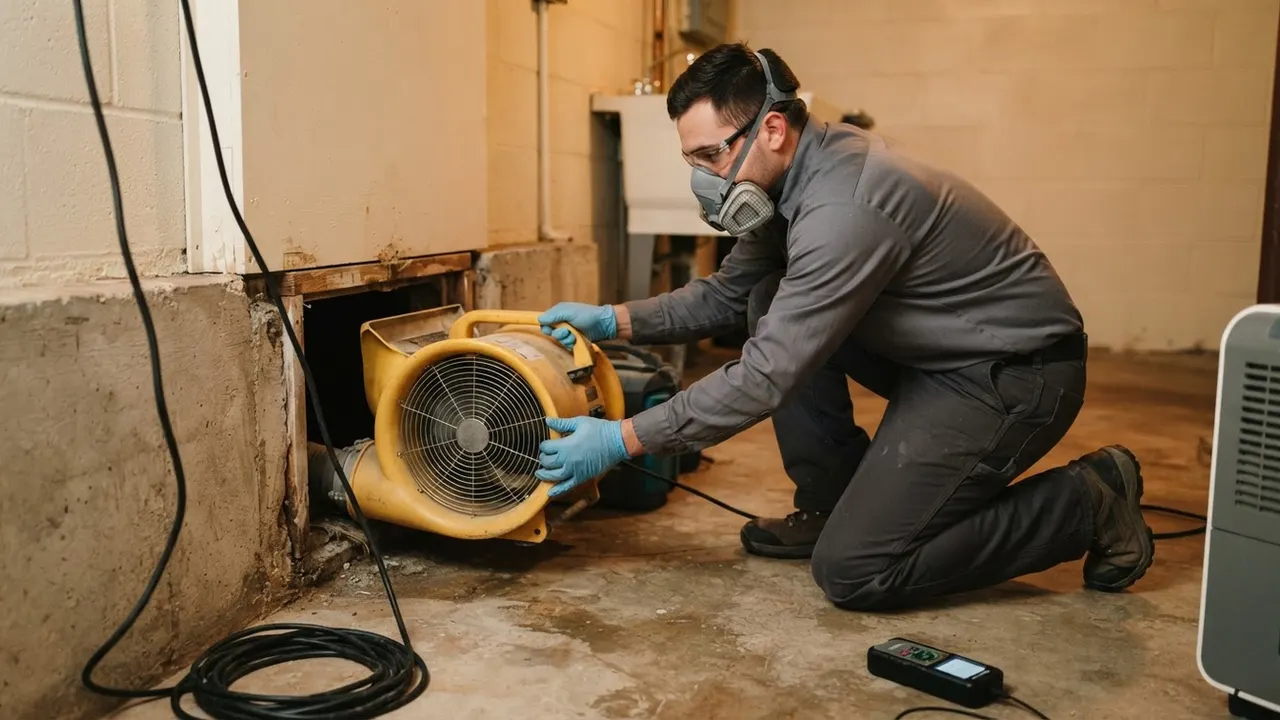
The scrubber filters air in the contained work zone while affected materials are disturbed. Proper placement supports dust control and helps limit movement into adjoining spaces.
A dehumidifier removes moisture from room air during structural drying. We adjust operation based on material readings and room conditions rather than leaving equipment to run without checks.
Air movers direct airflow across exposed surfaces to support evaporation. We position them to reach damp areas while maintaining a controlled work zone.
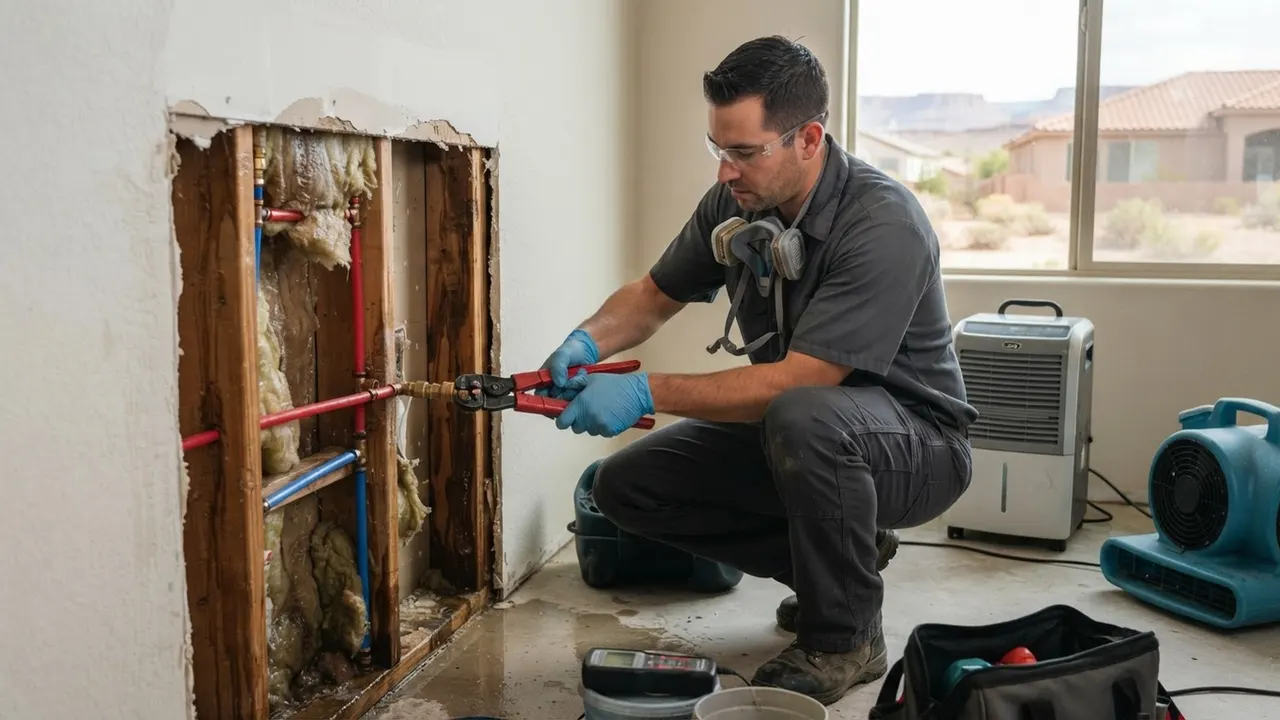
We locate and stop the water entry before closing or cleaning the affected assembly. This may mean coordinating a plumbing repair, roof repair, or extraction step. Without source control, fresh moisture can undermine cleanup and cause the same materials to become damp again.
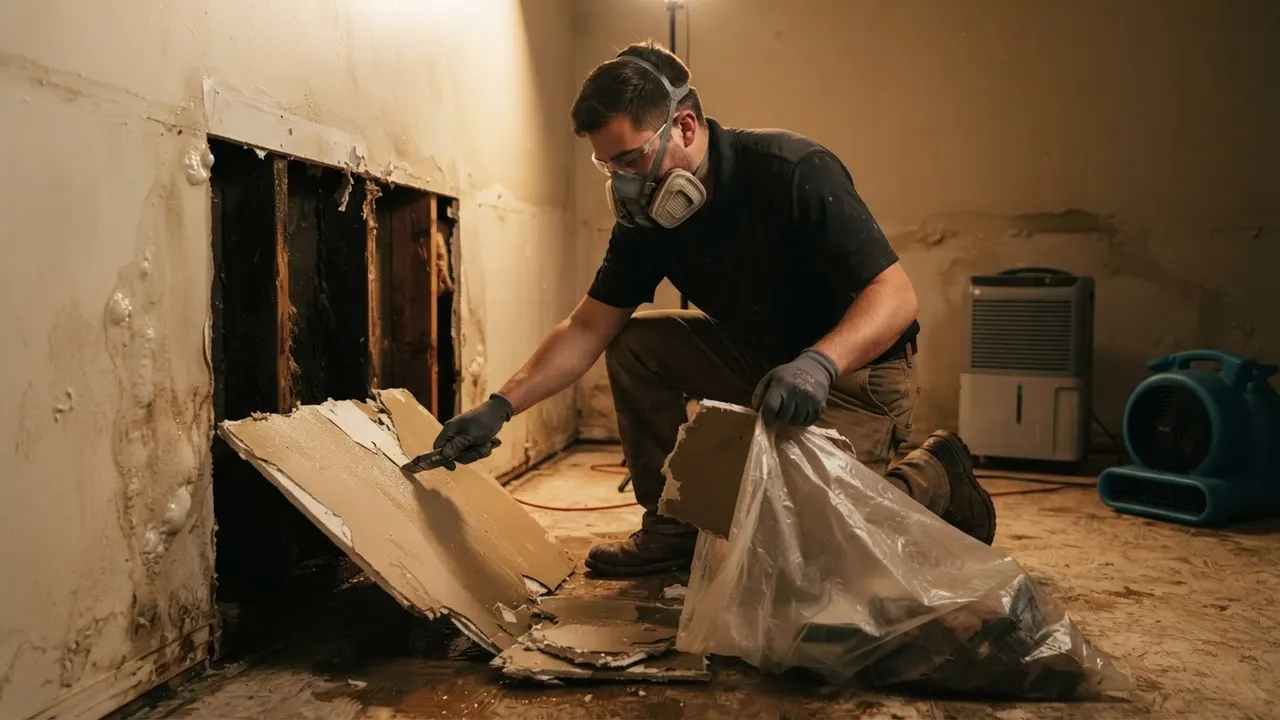
We isolate the work area, use filtration, and remove mold-affected porous materials in controlled sections. Debris is contained as it leaves the area, and exposed surfaces are inspected before cleaning. The approach limits unnecessary disturbance while reaching materials that cannot be adequately cleaned in place.
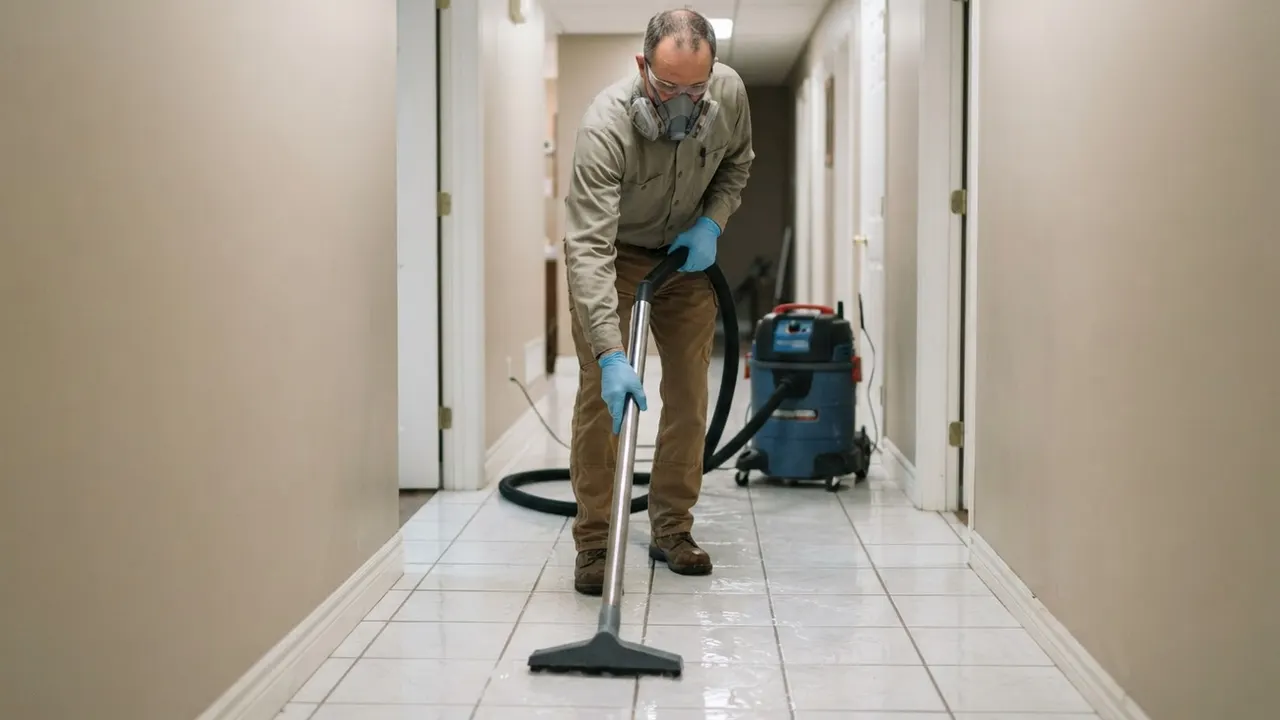
We use drying equipment and repeat moisture readings to track the condition of affected materials. Room humidity and surface readings help guide equipment adjustments. Drying is complete when the project readings support the next repair step, not merely when the surface feels dry.
We inspect the cabinet base, flooring edge, and adjoining wall for moisture. Our team removes affected padding or damaged drywall as needed, contains debris, and dries the remaining structure. We also confirm the appliance leak has stopped before cleanup is considered complete. You know whether the odor came from a hidden wet layer, which materials were removed, and what must dry before cabinet or floor repairs.
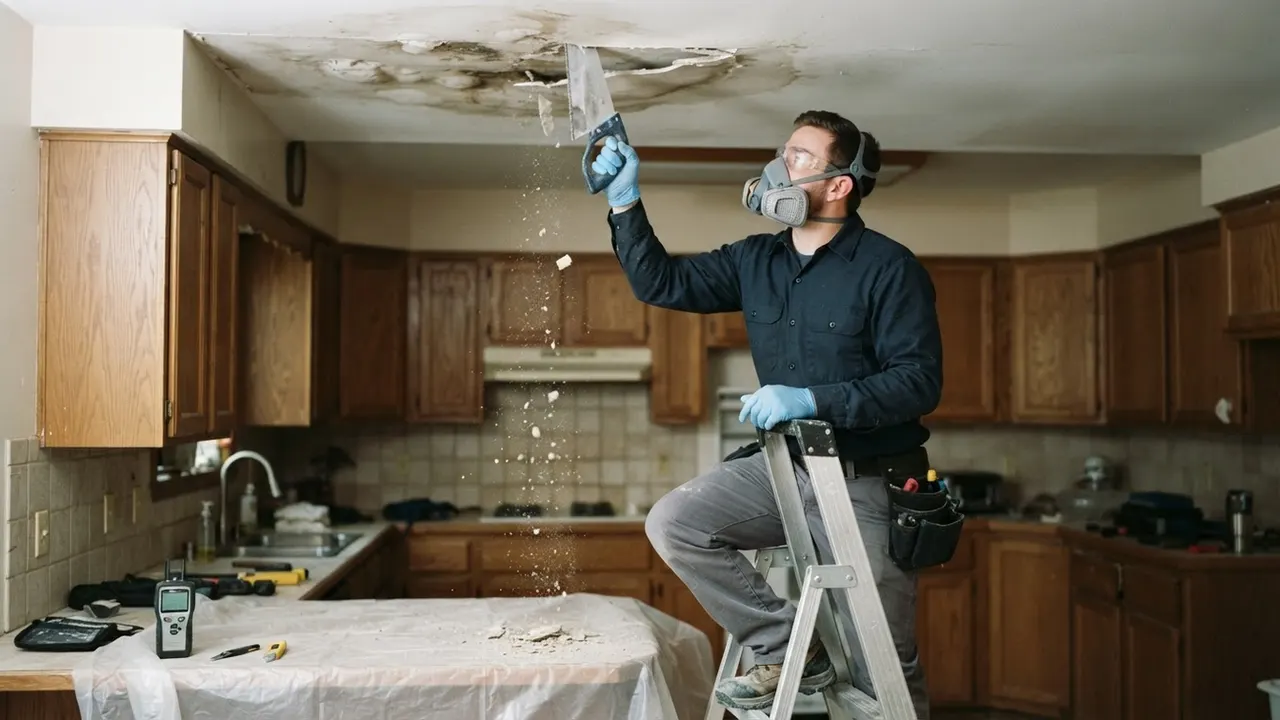
We check the roof-related water path, isolate the bedroom work zone, and open the ceiling where necessary to inspect the cavity. Wet insulation is removed when it cannot be dried in place, and exposed materials are cleaned and dried before repairs. The concealed area is addressed instead of being covered by new paint, and you have a clear route from leak repair to ceiling restoration.
We verify the plumbing source is controlled, inspect the wall and trim, and set containment before removing affected drywall. Our crew checks framing and nearby flooring, cleans suitable surfaces, and uses measured drying to prepare the wall for replacement. You avoid sealing damp framing behind a new wall and can plan the repair around the actual area affected by the leak.
We inspect the closet and the wall shared with adjacent rooms, then document moisture and visible damage. Containment protects nearby areas during removal, while drying equipment addresses damp framing. We identify related repairs and provide a practical sequence for returning the space to use. The property manager gets a defined affected area, a record of cleanup steps, and a clearer basis for scheduling repairs before a new tenant arrives.
Mesquite's hot, dry outdoor conditions do not prevent mold indoors when a leak leaves water trapped behind a wall or beneath flooring. Air conditioning can keep a closed room cool while a wet cavity remains damp, so we check materials rather than relying on the room's feel. We commonly investigate appliance leaks, roof leaks after storms, plumbing failures, and moisture entering near slab edges. Our mold cleanup services Mesquite work begins by locating the source and mapping the affected area before removal. In homes around Downtown Mesquite and Samuell Farm, access can vary from open living areas to tight utility closets, changing how we position containment and drying equipment. We serve Clark County and nearby Mesquite neighborhoods, including ZIP codes 89027, 89034, and 89024. If you are looking for emergency mold removal in Mesquite, Nevada, tell us whether water is still entering and which rooms are occupied. That helps us plan safe access, extraction, and cleanup in the right order.
A slow pipe leak left a musty odor and staining along the laundry-room baseboard. The visible area measured about 12 square feet, but moisture readings showed damp drywall beyond the stain. The homeowner had already stopped the leak, yet the wall cavity and nearby flooring still needed inspection before repainting.
We contained the room, removed the affected lower drywall, and dried the exposed framing over three days. Follow-up readings showed the treated framing had returned to the project's drying target, and the odor source was removed with the wet material. The homeowner had a defined area ready for drywall replacement rather than a stain covered with paint.
Check under the laundry connections every few months and address drips promptly. Keep the wall accessible until repairs are complete, and watch for renewed staining or a musty smell after the room is back in use.
A dishwasher leak soaked the cabinet toe-kick and carpet padding in an adjoining room. The kitchen floor looked dry, but the padding remained damp at the transition, and a small area of growth appeared behind the cabinet. Surface cleaning alone would not have addressed the trapped moisture.
We removed the affected padding and damaged cabinet-base material, cleaned suitable surfaces, and set drying equipment for two days. The work area stayed contained, and moisture checks guided the next repair step. The homeowner could replace damaged finishes after the exposed materials dried, with the leak source already controlled.
Inspect appliance hoses and the cabinet base after installation or service. If water appears at a floor transition, dry the area promptly and check beneath removable trim rather than waiting for odor or staining.
After a storm, a bedroom ceiling developed a growing stain beneath a roof leak. The surface showed roughly 8 square feet of discoloration, but damp insulation extended into the ceiling cavity. The room smelled musty, and the owner needed to know whether repainting would hide an ongoing moisture problem.
Once the roof entry was addressed, we contained the bedroom, removed wet ceiling material and insulation, and dried the exposed structure over four days. Repeat readings showed the cavity was ready for the next repair stage. The owner received a clear transition from remediation to ceiling replacement instead of an uncertain patch.
After roof repairs, check the ceiling and attic area for new staining or damp insulation. Keep furniture away from a known leak zone until the cavity has been inspected and drying is complete.
Mold remediation after water damage Mesquite NV addresses more than visible spots: hidden dampness, damaged materials, and recurring odors often point to moisture that remains inside an assembly. We trace the source, determine what can be cleaned, and remove materials that cannot be returned to a suitable condition.
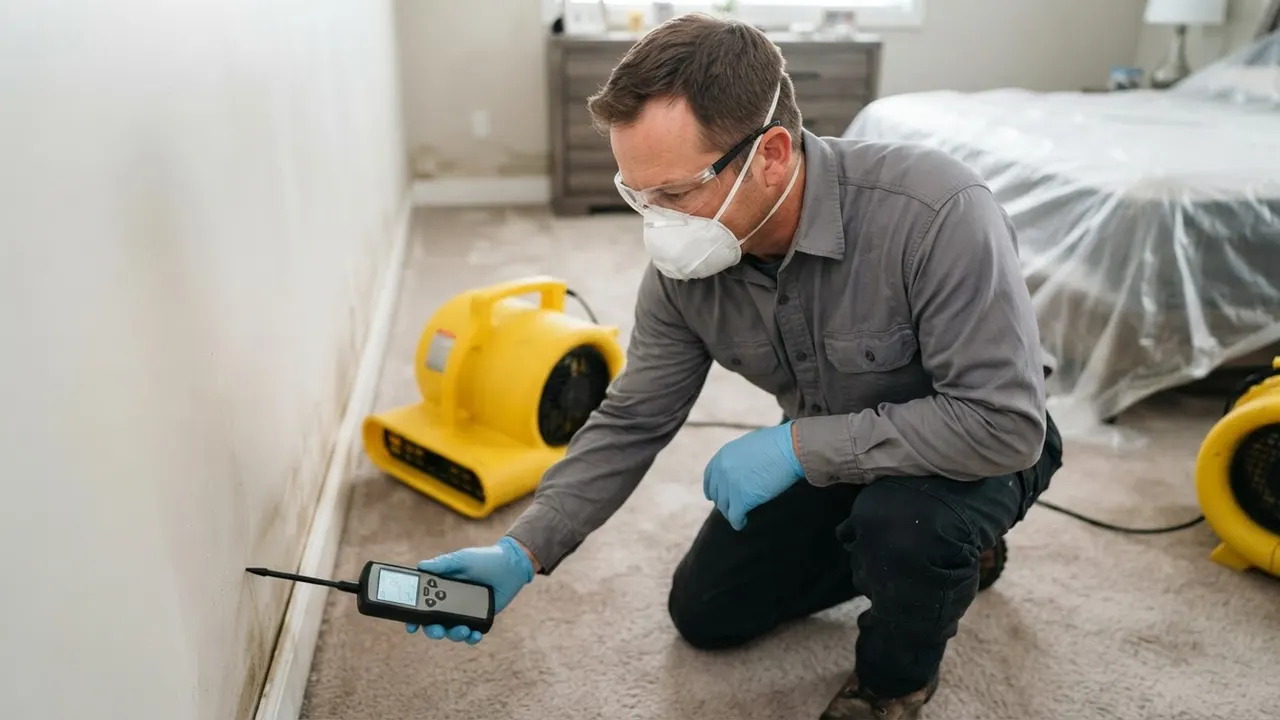
We inspect the likely water path, check adjacent materials, and open the affected area under containment when needed. Our team removes unsalvageable porous material, cleans suitable surfaces, and dries the cavity. We also identify whether the original leak or another source still needs repair before the wall is closed. A lingering odor can signal damp materials behind trim or inside a wall, where moisture continues to support growth and damage.
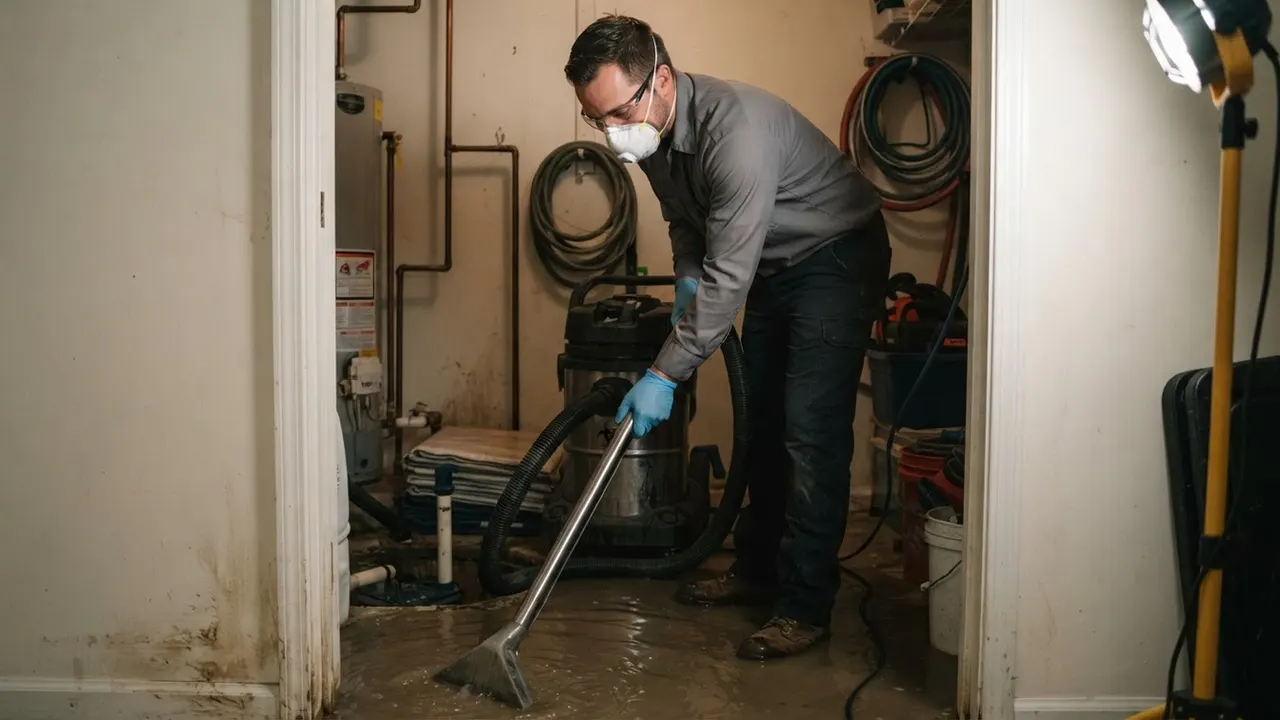
We look beyond the visible surface to find trapped moisture in drywall, insulation, or flooring layers. After addressing the source, we remove affected porous materials and clean the remaining structure with appropriate containment. Moisture readings help confirm that the area is drying rather than simply appearing cleaner. Repeated surface cleaning leaves the moisture source and affected backing material untouched, so growth or staining can return.
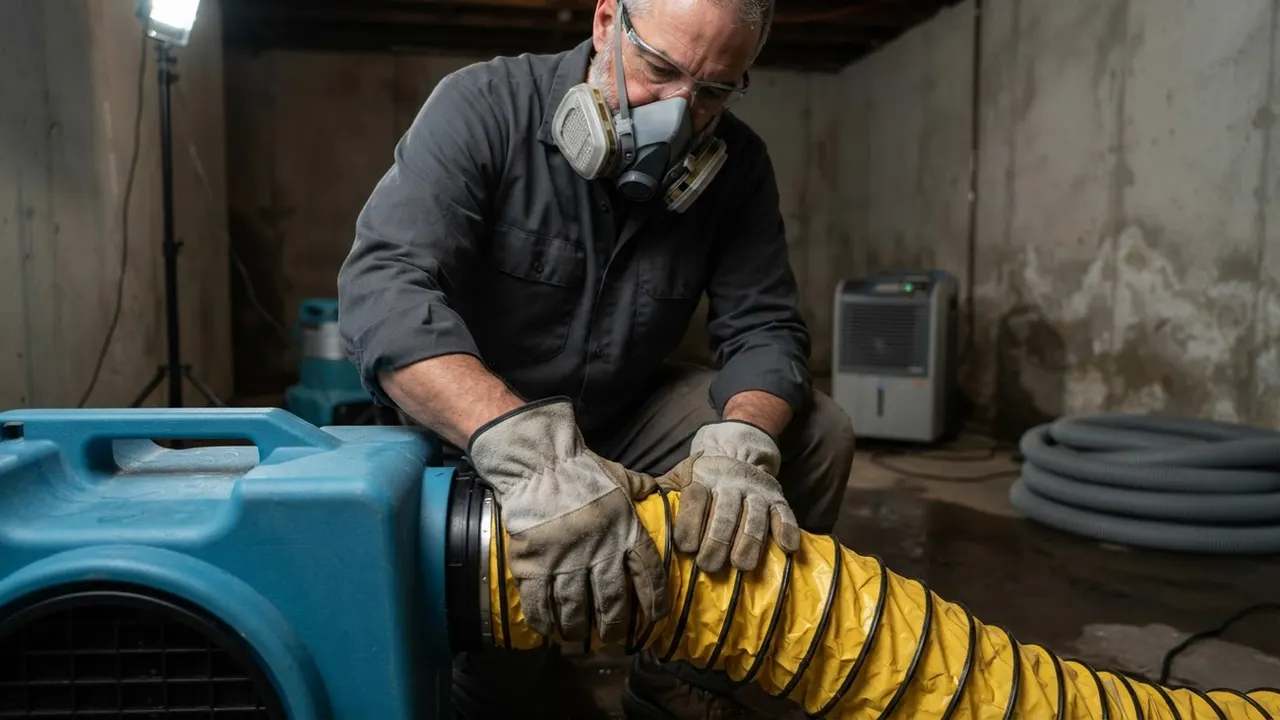
We assess the floor layers and edges, extract remaining water where possible, and determine whether padding or other porous material needs removal. We dry the exposed structure and check progress before floor repairs. This gives you a clear answer about what can remain and what needs replacement. Wet carpet padding or underlayment can stay damp after the top surface dries, increasing odor and damage beneath the finished floor.
We trace the leak, inspect the ceiling cavity, and contain removal if damaged material needs to come down. We dry exposed framing, clean suitable surfaces, and coordinate roof or plumbing repair as appropriate. The ceiling is ready for rebuilding only after moisture conditions support that next step. Water held above a ceiling can affect insulation and framing, while the visible stain understates the area that became wet.
We separate the affected work zone from occupied rooms before disturbing mold-affected material. A HEPA air scrubber helps capture airborne particles during controlled removal, while protective barriers reduce dust migration. This is especially useful when a bedroom, hallway, or shared business space sits beside the damaged area.
Cleaning without fixing the leak leaves the cause in place. We look for the source, whether it is a burst pipe, slab leak, or appliance leak, and coordinate drying or water repair as needed. You receive a clear explanation of what must be corrected before the room is closed up.
Drywall, insulation, carpet padding, and hardwood flooring do not respond to moisture in the same way. We assess each material and separate salvageable surfaces from items that need removal. That avoids treating every room alike and helps limit unnecessary demolition while keeping damp porous materials from being concealed.
We use measured conditions to guide drying rather than relying on touch or appearance alone. A dehumidifier and air mover support evaporation, while moisture readings track progress at affected points. The result is a practical completion check before rebuilding begins, not a promise based on a fresh coat of paint.
Clear records you can keep and share.
Affected materials and cleanup boundaries reviewed.
Moisture checks tracked during the work.
Repair sequence explained before the area is closed.
Not every marked surface needs removal, and not every material can be cleaned in place. We assess its condition, moisture exposure, and location before choosing the next step.
Drywall and insulation can hold water inside their structure. If they are damaged or mold-affected, removal may be the practical option.
Durable surfaces may be cleaned when their condition allows it. We still check joints, edges, and the material behind them for trapped moisture.
A surface that feels dry does not prove the cavity is dry. Repeat readings help show whether the structure is ready for repairs.
Outside these neighborhoods? Call and ask about service in your area. (833) 546-4116
A small contained area often varies while larger or concealed damage can vary. Typical 2026 pricing in Mesquite depends on affected square footage, containment, material removal, access, and drying time. We inspect the source and affected materials before pricing the work. Testing, reconstruction, or repairs to an active plumbing or roof leak can add separate costs.
We stop the water source, isolate the affected zone, remove unsalvageable porous materials, clean suitable surfaces, and verify drying with moisture readings. For mold remediation after water damage Mesquite NV, we also check nearby cavities and floor edges where water can travel. A small area may take one to three days, while extensive damage can take longer. Rebuilding starts only after the affected structure is dry enough for repair.
You cannot determine a mold's health risk from color alone, so treat visible growth and persistent dampness as reasons to investigate. Avoid scraping or dry-brushing a large affected area, since disturbance can spread particles. We inspect the moisture source and affected materials, then recommend containment and removal suited to the size of the problem. If occupants have health concerns, consult a qualified medical professional while the building issue is addressed.
Coverage depends on your policy, the cause of the water, and how quickly the damage was addressed. A sudden covered pipe failure may be treated differently from long-term seepage or maintenance issues. We document visible damage, moisture conditions, and work performed to support your claim file, but your insurer makes the coverage decision. Contact your carrier promptly and keep photos, invoices, and records of any leak repair.
Tell us where you see growth, when the water problem began, and whether the area is still damp. Our team will discuss the next inspection and cleanup steps. Call Mesquite Water Damage Company at (833) 546-4116 to arrange service for your Mesquite property.
Call (833) 546-4116 to explain what happened and where water is collecting. We take calls for water damage requests and connect you with an independent company that can discuss service details directly. If the leak is active, shut off the source when safe and tell us whether the water reached electrical equipment, flooring, or more than one room.